

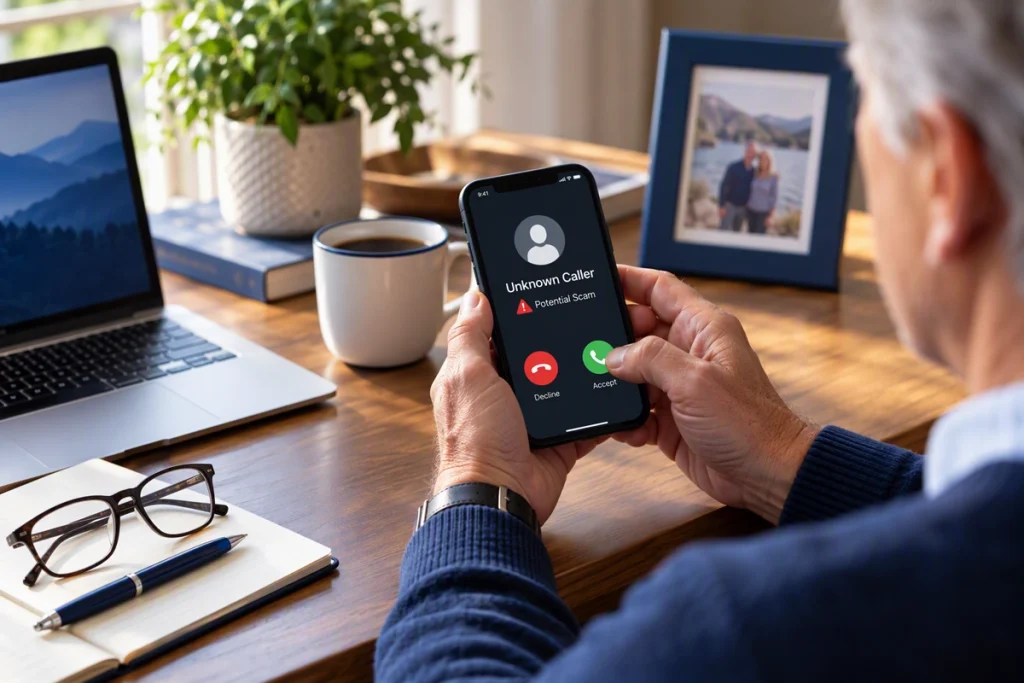
Scams have become harder to recognize. A phone call can appear to come from a familiar organization. A text can look like it came from your bank. Even a familiar voice may not be enough to tell you who is really on the other end.
But while the technology keeps changing, many scams still rely on the same basic approach: create urgency, earn your trust, and get you to act before you have time to verify what is happening. That is why one of the simplest protections is also one of the most effective:
Pause. Verify. Then act.
How Can You Tell If Something Is a Scam?
When something does not feel right, slow the conversation down. A legitimate request can withstand a few minutes of verification. Here are 10 common scams to recognize.
1. Government and Business Imposter Scams
You receive a call, email, or text from someone claiming to represent a government agency, financial institution, law enforcement agency, or other trusted organization. They may say you owe money, your benefits are in jeopardy, or one of your accounts has been compromised. The story is designed to make you nervous enough to react.
Ask yourself: Was I expecting this call or message? Is this person pressuring me to move or send money right away?
Be particularly suspicious if someone tells you to transfer your money somewhere else to “protect” it. When in doubt, end the conversation and contact the organization independently using a phone number or website you know is legitimate.
2. Tech Support Scams
A pop-up, phone call, email, or text says there is a virus, security issue, or other problem with your computer. The person offers to fix it and asks for remote access to your device. That access can expose your personal information, files, and financial accounts.
Ask yourself: Did I contact this company for help, or did they contact me?
Never give remote access to your computer or device to someone who contacted you unexpectedly.
3. Grandparent and Family Emergency Scams
You receive an urgent call from someone claiming to be a child, grandchild, relative, or friend. There has been an accident. They are in trouble. They need money right away. And quite often, they do not want you to tell anyone else. That request for secrecy should make you pause. Scammers can also use technology to imitate a loved one’s voice, so a familiar-sounding voice alone may not confirm who is calling.
Ask yourself: Can I hang up and call my loved one directly?
Use a number you already have, or contact another family member who can confirm what happened.
4. Social Media and Relationship Scams
Some scams unfold slowly rather than through a single urgent message. A stranger connects with you through social media, a dating platform, or a messaging app. Over time, the conversations become more personal and trust develops. Eventually, the person needs financial help or presents an investment opportunity.
Ask yourself: Have I actually met this person? Why do they need money from me?
Be very cautious about sending money or sharing financial information with someone you know only online.
5. Phishing Emails and Text Messages
A message appears to come from your bank, a retailer, a delivery company, a government agency, or another organization you recognize. There is usually a reason you need to act: an unusual purchase, a frozen account, a missed delivery, or some other problem. The link in the message may lead somewhere very different from where you expect.
Ask yourself: Was I expecting this message?
If you are unsure, do not use the link or phone number in the message. Go to the organization’s website or app directly, or call a phone number you know is legitimate.
6. Fake Website and Pop-Up Scams
You are browsing online when a warning suddenly appears claiming your computer is infected, your identity needs to be verified, or your browser has been compromised. The message may instruct you to call a phone number, download software, or take another unfamiliar action.
Ask yourself: Why is this website asking me to download something or take unusual steps?
Do not call a phone number displayed in a suspicious pop-up or download software at the direction of someone you do not know. Close the page and, if you are genuinely concerned about your device, seek help independently.
7. Authentication Code Scams
Multifactor authentication adds an important layer of security, but scammers may try to convince you to hand that protection over to them. Someone claiming to represent your bank, employer, or technology company may ask you to read back a one-time verification code sent to your phone.
Ask yourself: Did I initiate this login or request?
Treat authentication codes like passwords. If you did not initiate the activity that generated the code, stop.
8. Fake Check Scams
Someone sends you a check for more than the amount you were supposed to receive. Then you are asked to deposit it and send part of the money somewhere else. The check may initially appear to clear, which can make the transaction seem legitimate.
Ask yourself: Why would someone deliberately overpay me and ask me to send some of the money elsewhere?
If a payment arrangement seems unusual or unnecessarily complicated, stop and verify it before sending money.
9. Healthcare and Medicare Scams
Scammers may offer discounted medical equipment, prescriptions, insurance services, or other healthcare products as a way to obtain personal information.
Ask yourself: Did I request this product or service?
Do not provide Medicare, insurance, or other personal information simply because the caller seems to know something about you. Verify who you are dealing with first.
10. Investment Scams
Investment scams can be particularly convincing because they often sound like opportunities rather than threats. Someone may promise high or guaranteed returns, little risk, an “exclusive” opportunity, or a limited amount of time to participate. They may also push you toward an unfamiliar payment or investment method.
Ask yourself: Why do I need to decide this quickly? Have I independently checked who is offering the investment?
The same pause that can protect you from an imposter scam applies here. If someone does not want you to have time to research the opportunity or discuss it with a trusted professional, step back before committing any money.
What Are the Biggest Warning Signs of a Financial Scam?
Different scams use different stories, but many share a few recognizable warning signs. Be cautious when someone:
- Contacts you unexpectedly.
- Creates a sense of urgency or fear.
- Tells you not to speak with family members or trusted professionals.
- Asks you to move money in order to “protect” it.
- Requests payment using gift cards, cryptocurrency, wire transfers, cash, or precious metals.
- Wants remote access to your computer or device.
- Sends a link and tells you to log in or verify personal information.
- Asks for passwords or authentication codes.
- Promises unusually high or guaranteed investment returns.
- Discourages you from taking time to check whether the request is legitimate.
How Can You Protect Yourself From Financial Fraud?
A few consistent habits can help you respond more safely when something seems suspicious.
1. Give Yourself Permission to Slow Down
If someone says you must act immediately, that is a good reason to pause. Hang up. Close the message. Step away for a few minutes. Scammers depend on urgency. Slowing down changes the situation.
2. Verify the Request Independently
Do not rely on contact information the caller or message provides. If someone says they are from your bank, call the number you already use for your bank. If a family member supposedly needs help, call that person yourself. If a company sends a suspicious email, visit its website directly rather than clicking the link.
3. Keep Passwords and Verification Codes Private
Do not share account passwords or authentication codes with another person. If you receive a verification code for a login you did not initiate, do not approve the request.
4. Pay Attention to Unusual Payment Requests
If someone requests payment by gift card, cryptocurrency, wire transfer, cash, or precious metals, stop and verify who you are dealing with before sending anything.
5. Bring Someone Else Into the Conversation
Scammers often succeed when they can isolate someone and keep the pressure on. If money is involved and something feels unusual, call someone you trust. That might be a spouse, adult child, friend, financial professional, or financial institution. A second set of eyes can spot something you missed, especially when you have been put under pressure.
What Should You Do If You Think You Have Been Scammed?
If you believe money or personal information may be at risk, do not let embarrassment keep you from acting.
Contact your financial institution immediately through a trusted phone number or official website. If someone gained access to your computer or accounts, change your passwords and take steps to secure your personal and financial information.
You can also report fraud to the Federal Trade Commission at ReportFraud.ftc.gov. Internet-related fraud and cybercrime can be reported through the FBI’s Internet Crime Complaint Center at IC3.gov.
Most importantly, tell someone you trust what happened. The sooner you act, the sooner you can begin addressing the situation.
A Simple Rule to Remember: Pause. Verify. Protect.
You do not need to become an expert on every new scam. You need a process.
When an unexpected call, text, email, or investment opportunity involves your money, pause before acting, verify the request independently, and protect your personal and financial information.Discuss this process with your family, too. Make sure the people you care about know it is always okay to stop and verify a request before sending money or sharing information. If something involving your money does not feel right, you do not have to sort it out alone.
If you receive an unusual financial request or want to talk about safeguards for yourself or a family member, we invite you to reach out to the team at Aspire Wealth Group.
The information contained in this blog is provided for educational purposes only and does not purport to be a complete description of the matters discussed. The information has been obtained from sources considered reliable, but Aspire Wealth Group and Raymond James do not guarantee that it is accurate or complete. This material is not intended to provide legal, tax, cybersecurity, or identity-theft advice. If you believe you have been targeted by fraud, contact the appropriate financial institution, technology provider, law enforcement agency, or other qualified professional.
Have questions about your financial plan?
Every financial situation is unique. If you’re wondering how the ideas in this article apply to your own goals, we’re here to answer your questions and discuss how we may be able to help.
Explore More Insights

AI and Cybersecurity: Fighting Fire with Fire
Artificial intelligence is creating new, more complex cybersecurity challenges. It may also hold the solutions.
Read More >

Investing in Artificial Intelligence
Considering the potential benefits and risks of the latest tech revolution.
Read More >

After the Loss of a Loved One, Watch Out for Scams
Scam artists often prey on those who are most vulnerable. Unfortunately, this includes individuals who have recently lost a loved one and are easily taken advantage of during their time of grief.
Read More >